
Funky Kittens — Meta Ads for E-commerce Sales & Retargeting
A real Facebook and Instagram Ads project for a UK e-commerce brand, combining purchase-focused campaigns, audience and creative testing, retargeting and conversion-led optimisation.
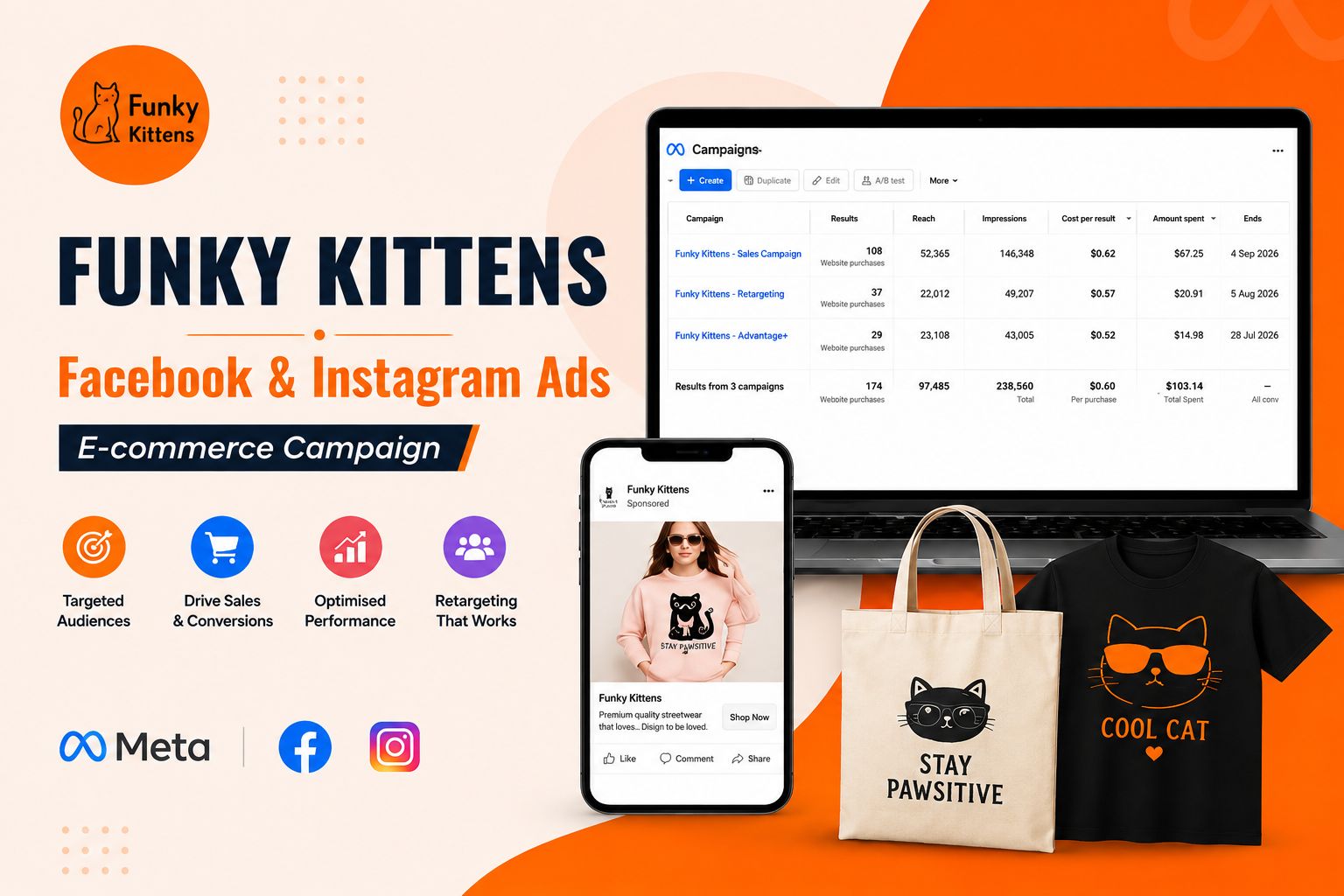
Real purchase-focused Meta Ads performance
The figures below come from the Ads Manager screenshot shown in this case study and represent one specific Funky Kittens campaign period.
Red Nose Day T-Shirts Campaign · 05-03-2026
Campaign-level evidence is included further down the page so the results can be viewed in context.
These figures describe this campaign snapshot only. Performance can vary by product, offer, audience, creative, season, budget and market conditions.
Meta Ads management designed around purchases, not traffic alone
Funky Kittens needed a practical paid-social structure that could support customer acquisition, product sales, retargeting and clearer conversion measurement.
Funky Kittens is a UK e-commerce brand selling personalised and printed products. My work covered Facebook and Instagram Ads management with a focus on customer acquisition, online purchases, warm-audience follow-up and useful conversion data.
Because an e-commerce account can involve multiple products, offers and seasonal opportunities, campaign structure needed to remain understandable enough to compare performance and make budget decisions without creating unnecessary complexity.
I treated advertising and measurement as connected parts of the same system. Campaign structure, audiences, creatives and retargeting were reviewed alongside website purchase signals so optimisation decisions could be based on more meaningful data.
What the account needed
- Purchase-focused campaigns instead of traffic-only optimisation.
- Clear prospecting and retargeting audience structure.
- Creative and offer testing across products and occasions.
- Reliable purchase signals for campaign analysis.
- A repeatable process for performance and budget decisions.
How I approached the Meta Ads account
The work combined campaign structure, audience and creative testing, retargeting and conversion-led optimisation rather than treating each area as a separate task.
Campaign Structure
Campaigns were organised around product intent, objective and customer journey stage.
Audience & Creative Testing
Audience and creative combinations were reviewed to identify stronger purchase signals.
Warm-Audience Follow-up
Retargeting reconnected with people who had already shown product or website interest.
Conversion-Led Optimisation
Decisions were reviewed against purchase and conversion data instead of clicks alone.
The parts of the account that influenced day-to-day decisions
Paid-social performance was reviewed across multiple signals so one metric did not become the entire strategy.
Prospecting & Retargeting
Audience groups were separated by intent so cold acquisition and warm follow-up could be evaluated more clearly.
Product & Message Testing
Creative and messaging combinations were compared to understand which angles generated stronger purchase signals.
Spend Allocation
Budget decisions were informed by campaign results, cost trends and the quality of the conversion signals available.
Customer Journey
Campaign roles were considered across acquisition and follow-up instead of evaluating every ad in isolation.
Purchase Measurement
Website purchase events supported campaign reporting and gave optimisation decisions a stronger measurement base.
Ongoing Performance Analysis
Results, costs, audiences and creative signals were reviewed together before campaign adjustments were made.
Campaign strategy and real Ads Manager evidence
The case study includes both the project overview and a real campaign screenshot so prospective clients can see the work and the supporting data together.
Campaign Strategy Overview
Overview of the Meta Ads approach, including sales optimisation, audience testing, creative testing, retargeting and conversion measurement.
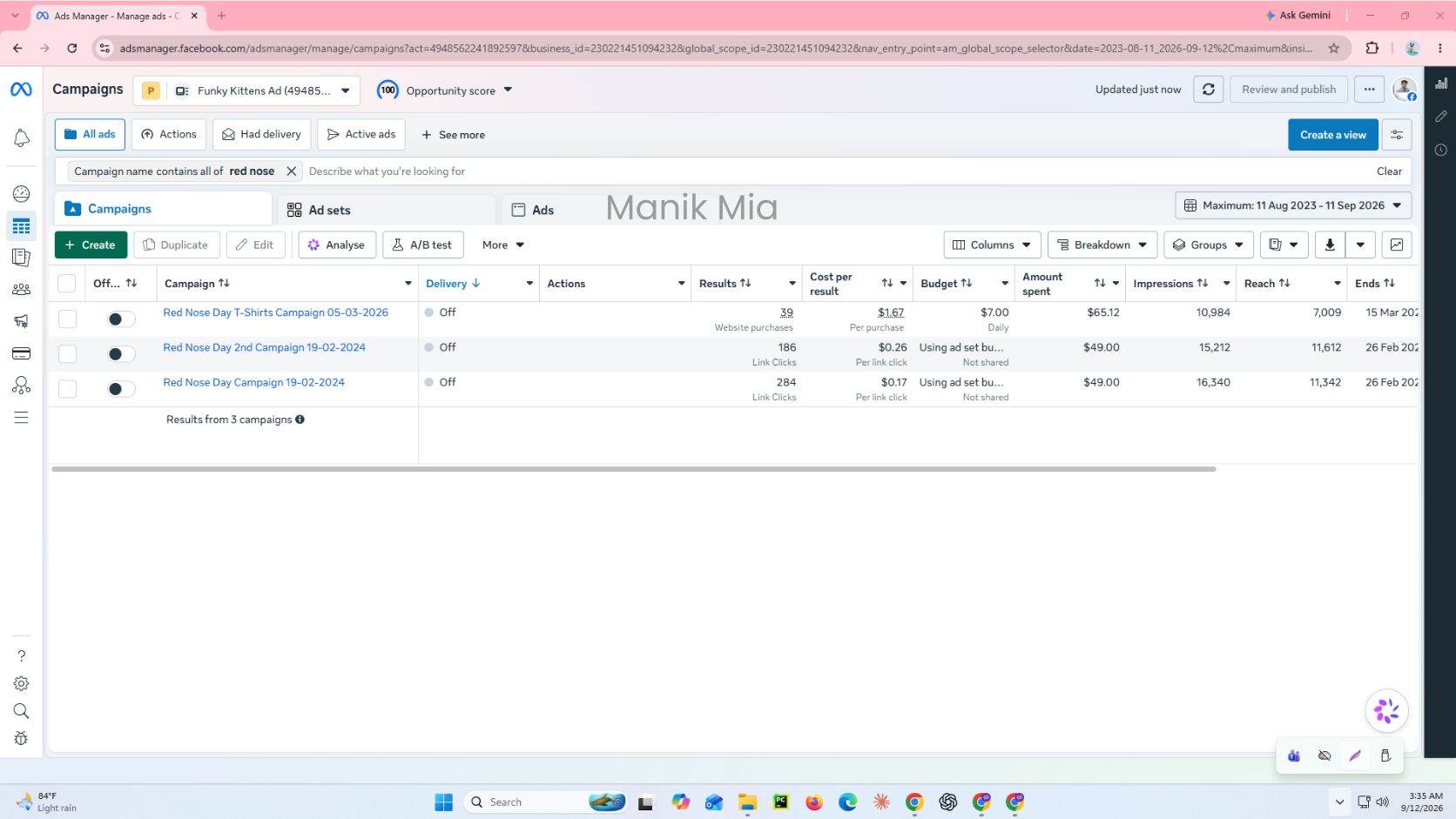
Ads Manager Performance
Real campaign data showing purchases, cost per purchase, amount spent, impressions and reach for the campaign snapshot described above.
What I handled in the account
The project combined hands-on Meta Ads execution with the measurement required to evaluate campaign performance.
Campaign Strategy
Objectives, structure, product priorities and practical budget allocation.
Audience Strategy
Prospecting, warm audiences and retargeting groups matched to campaign intent.
Creative Testing
Testing product, message and creative combinations to improve response.
Retargeting
Follow-up campaigns for users who had visited, engaged or shown purchase intent.
Conversion Tracking
Using website purchase signals and tracking data to support campaign analysis.
Ongoing Optimisation
Reviewing results, costs, audiences and creative signals to guide adjustments.
What this Meta Ads case study demonstrates
This project shows how paid-social execution and reliable conversion measurement can work together in an e-commerce account.
- Purchase-focused optimisation is more useful than judging e-commerce campaigns by traffic alone.
- Audience and creative testing need structure to produce useful comparisons.
- Retargeting should support the wider customer journey rather than operate in isolation.
- Reliable conversion signals make budget and optimisation decisions easier to justify.
- Campaign results should be presented with context rather than as universal performance.
- Paid social and tracking are more useful when they are reviewed together.
Need this type of support for your own campaigns?
This case study sits within my broader paid-media and measurement services.
Looking for a Meta Ads specialist for your e-commerce or lead-generation campaigns?
Send me your website and a short description of what you are currently running. I can review the situation and discuss the most useful next step for your Meta Ads, Google Ads or conversion tracking.